Introduction
If you’re planning to buy a silk saree, especially Mysore silk, one question always comes up — how to identify pure Mysore silk saree?
With so many fake or mixed silk sarees in the market, it’s easy to get confused. Many sellers claim their sarees are “pure silk,” but in reality, they may contain synthetic fibers or artificial zari. This means you could end up paying a premium price for something that’s not authentic.
In this detailed guide, you’ll learn how to identify pure Mysore silk saree using simple tests, expert tips, and practical buying advice—so you can shop confidently and avoid costly mistakes.
What is Mysore Silk Saree? (Overview)
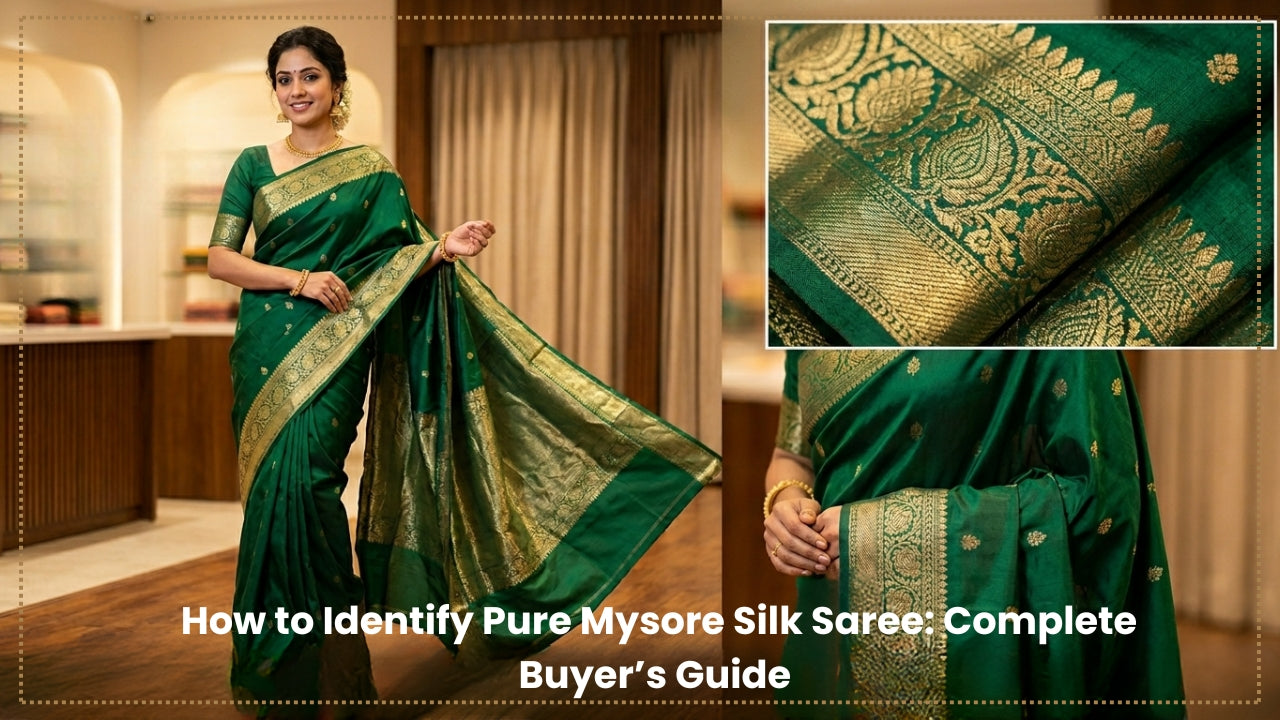
Mysore silk sarees are premium-quality sarees produced in Karnataka, India. They are known for their:
- Smooth and soft texture
- Natural shine (not overly glossy)
- Lightweight and elegant drape
- Use of pure mulberry silk
- Traditional gold zari work
Authentic Mysore silk sarees are often certified with the Silk Mark, which ensures the purity of silk.
How to Identify Pure Mysore Silk Saree (Step-by-Step Guide)
Let’s break down the most effective ways to identify original Mysore silk.
1. Check the Silk Mark Certification
The easiest and most reliable way to confirm authenticity is the Silk Mark label.
What to look for:
- A hologram tag attached to the saree
- A unique identification code
- Certification by the Silk Mark Organisation of India
If the saree doesn’t have a Silk Mark, it may not be pure.
2. Burn Test (Thread Test)
Only perform this test on a loose thread.
Steps:
- Take a small thread from the saree
- Burn it carefully
Results:
- Pure silk: smells like burnt hair and turns into ash
- Fake silk: smells like plastic and forms a hard bead
Real silk ash crushes easily.
3. Touch and Feel Test
Pure Mysore silk has a unique feel.
Signs of real silk:
- Soft and smooth (not slippery)
- Slightly warm to the touch
- Adapts to body temperature
Fake silk:
- Feels overly smooth or slippery
- Has a synthetic texture
4. Luster Test (Shine Check)
Mysore silk has a natural, elegant shine.
How to check:
- Hold the saree under light
Results:
- Pure silk: color appears to change slightly from different angles
- Fake silk: has a uniform, artificial shine
This is called natural sheen.
5. Zari Test (Gold Thread Check)
Zari plays a key role in Mysore silk sarees.
Steps:
- Scratch or rub the zari gently
Results:
- Pure zari: reveals red silk threads inside
- Fake zari: shows white or synthetic threads
6. Water Absorption Test
A simple home test.
Steps:
- Put a drop of water on the saree
Results:
- Pure silk: absorbs water quickly
- Fake silk: water stays on the surface
7. Price Check (Reality Check)
Price can reveal a lot.
Typical price range:
- Pure Mysore silk saree: ₹15,000 – ₹60,000+
👉 If a saree is priced too low, it’s likely not pure silk.
Tips to Buy Authentic Mysore Silk Saree
Knowing how to identify pure Mysore silk saree is important, but buying from the right place matters just as much.
Buy from Trusted Sellers
- Government silk stores
- Reputed showrooms
- Verified online platforms
Always Ask for Certification
- Ensure Silk Mark is present
- Request a proper bill and authenticity proof
Inspect the Weaving
- Even and tight weave
- No loose threads
- Clean finishing
Common Mistakes to Avoid
Avoid these common errors when buying silk sarees:
Judging by shine alone
Fake silk can also look shiny
Falling for low prices
Cheap sarees are often synthetic
Ignoring certification
Skipping Silk Mark verification is risky
Not checking reviews (online)
Always verify seller credibility
Expert Advice
According to textile experts:
- Pure Mysore silk is breathable and comfortable
- It has a balanced weight—not too heavy or too light
- Handloom silk feels more natural compared to machine-made fabric
👉 Pro Tip:
If something feels off about the saree, trust your instinct—it’s often not pure.
Real-Life Example
A buyer purchased a “pure Mysore silk saree” online for ₹4,999.
Later findings:
- No Silk Mark label
- Failed burn test (plastic smell)
- Slippery texture
Result: It was fake
Afterward, they bought a certified saree for ₹18,000 and noticed:
- Rich texture
- Elegant fall
- Long-lasting quality
FAQs
1. How to identify pure Mysore silk saree at home?
You can use tests like burn test, touch test, and water absorption test. Also, always check for Silk Mark certification.
2. Is Mysore silk saree expensive?
Yes, pure Mysore silk sarees usually start from ₹15,000 and can go higher depending on quality and zari work.
3. What is the difference between pure silk and artificial silk?
Pure silk is natural, breathable, and durable, while artificial silk is made from synthetic fibers and feels slippery.
4. Does pure Mysore silk last long?
Yes, with proper care, pure Mysore silk sarees can last for many years without losing their shine.
5. Can I buy Mysore silk sarees online safely?
Yes, but only from trusted sellers and always check for Silk Mark certification and reviews.
Conclusion
Now you clearly know how to identify pure Mysore silk saree and avoid falling for fake products. 🛡️
Always remember:
- Check the Silk Mark
- Feel the texture
- Verify the price
👉 If you’re planning to invest in a Mysore silk saree, choose authenticity over cheap deals.
Make a smart purchase and add a timeless, elegant piece to your wardrobe today! ✨